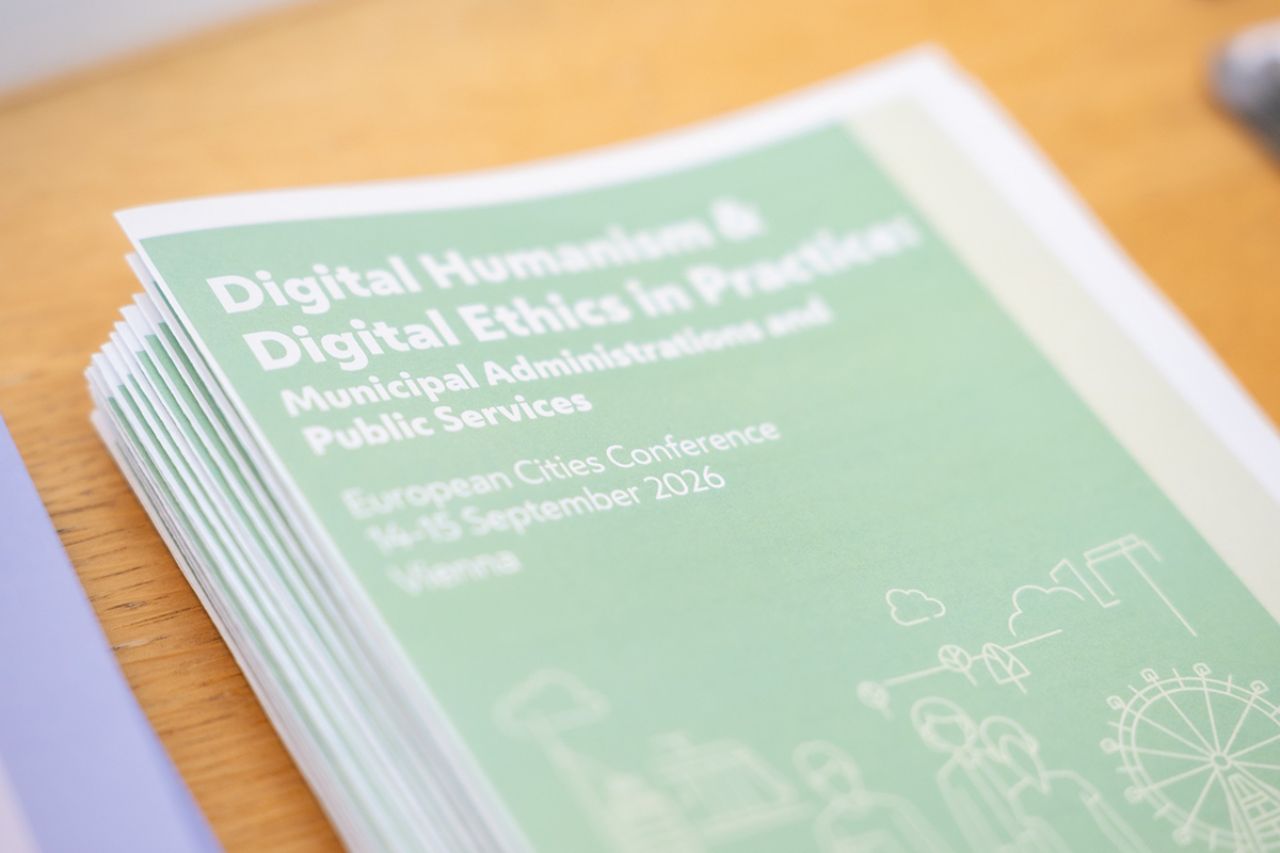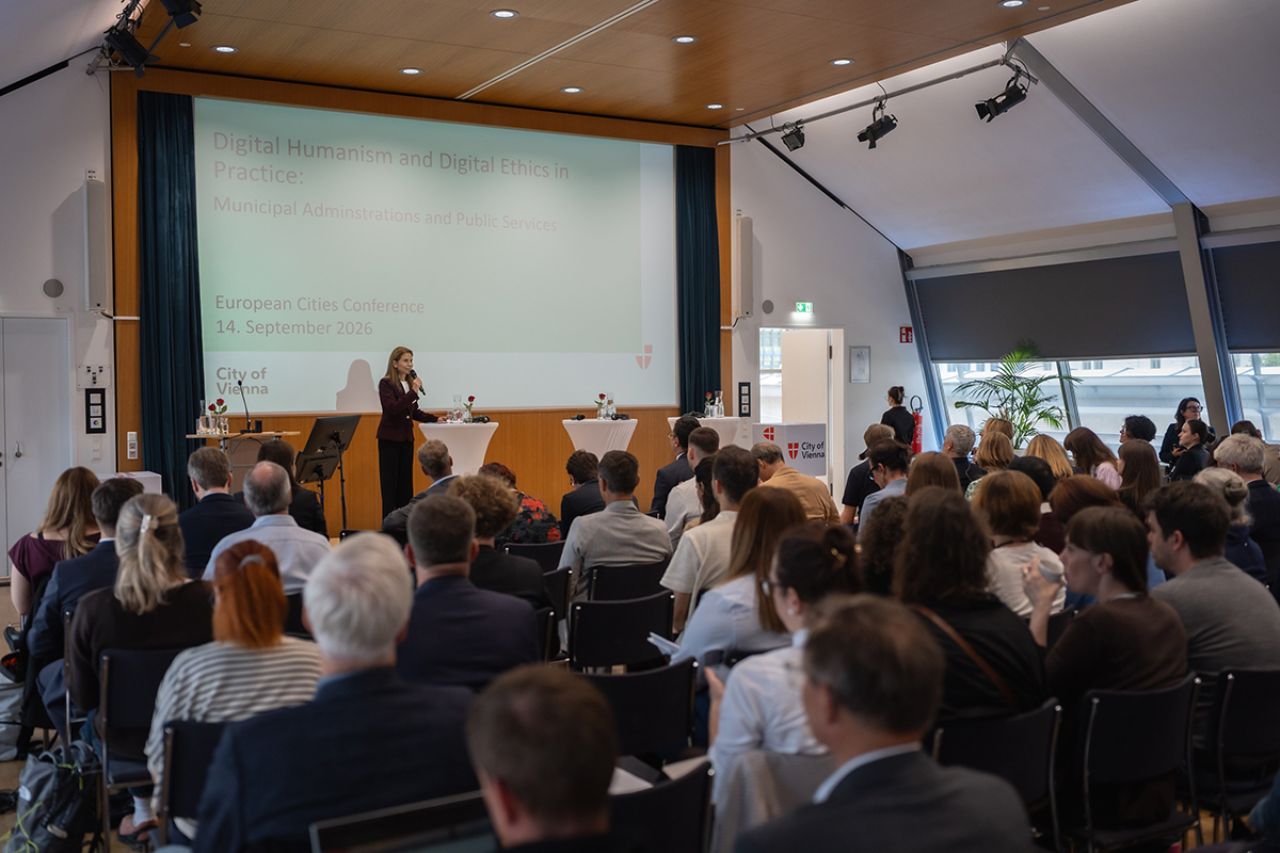
ECC "Digital Humanism and Digital Ethics in Practice: Local Authorities and Public Services"
14. - 15.9.2026


Financing & Event Organization: Municipal Department 27 - European Affairs (MA 27) & City of Vienna International Offices
Content design: Director’s Office for Science, Research and Business Location, Chief Executive Office
Start: Monday, 14 September 2026, 11 am
End: Tuesday, 15 September 2026, 2 pm
Venue: Urania, Dachsaal, Uraniastrasse 1, 1010 Vienna
Registration and enquiries: ecc@viennaoffices.at
Directions: Metro: U1, U3, U4; Tram: 1, 2; Further information: www.wienerlinien.at
The conference languages are German and English.
Please be advised that photographs, video footage, and audio recordings will be taken throughout this event. This material is used for documentation and promotional purposes (including website, social media, and printed materials). By attending this event, you consent to the publication of these recordings for reporting and marketing use
Video
Program
Day 1, 14 September 2026
Moderator: Sonja Kato
- 11 am Registration and brunch
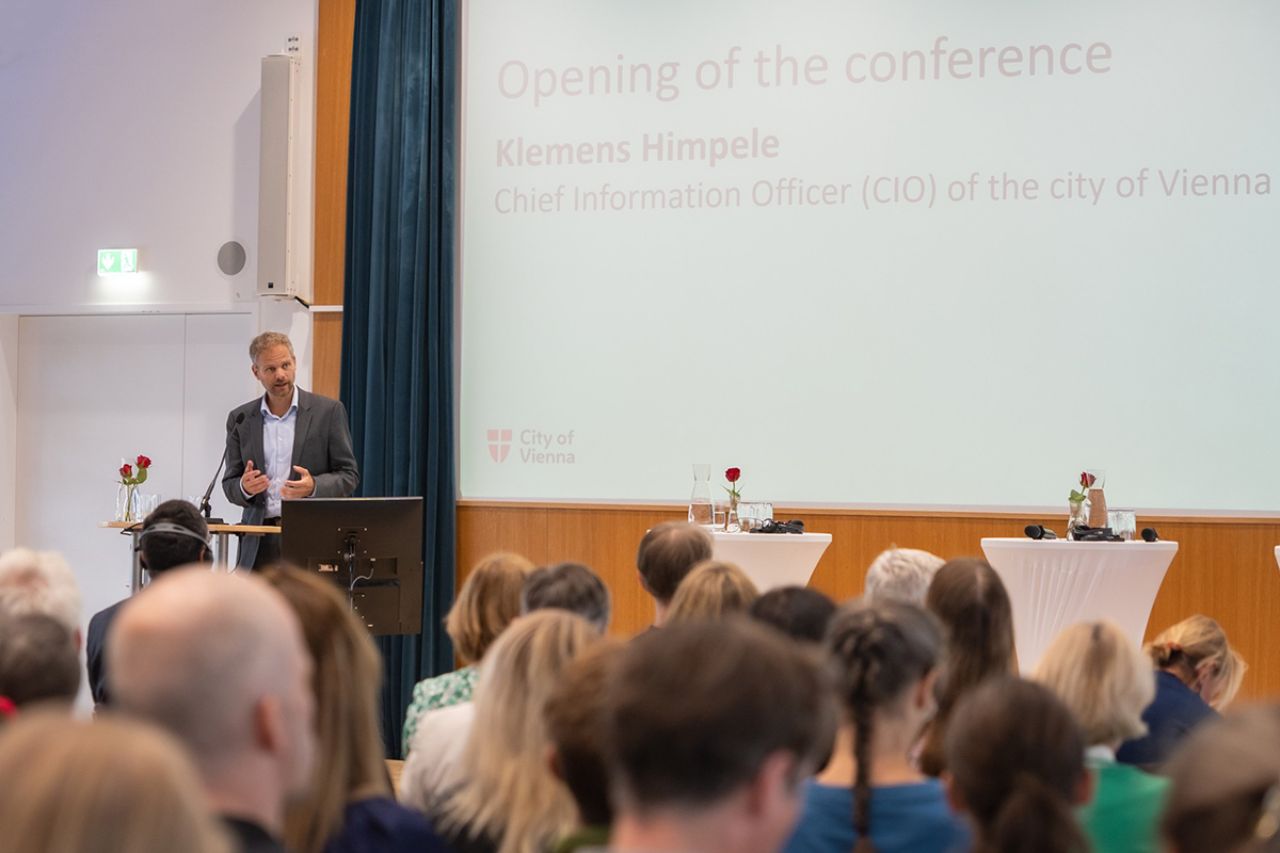
- 12 pm Welcome by Klemens Himpele, Chief Information Officer (CIO) of the city of Vienna
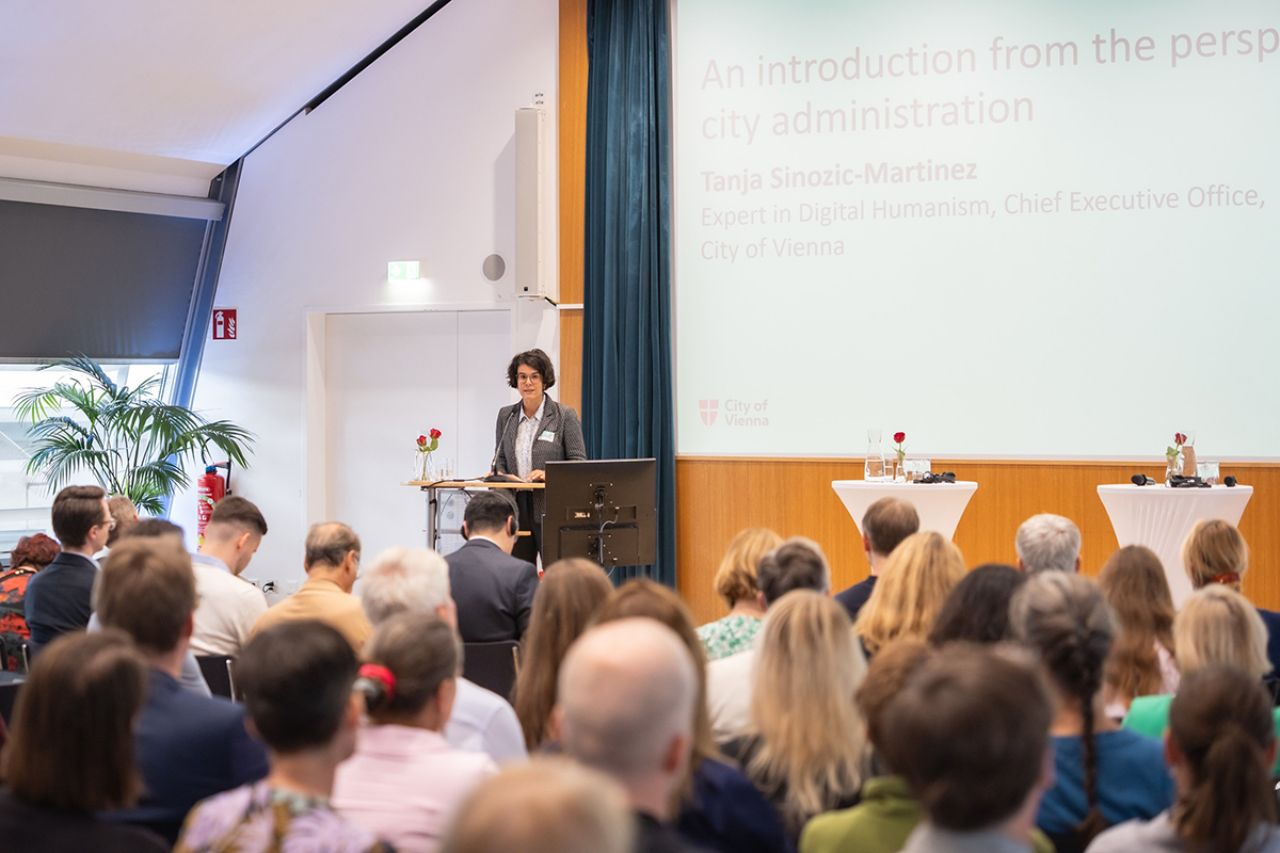
12.10 pm Welcome address: An introduction from the perspective of the city administration, Tanja Sinozic-Martinez, City of Vienna
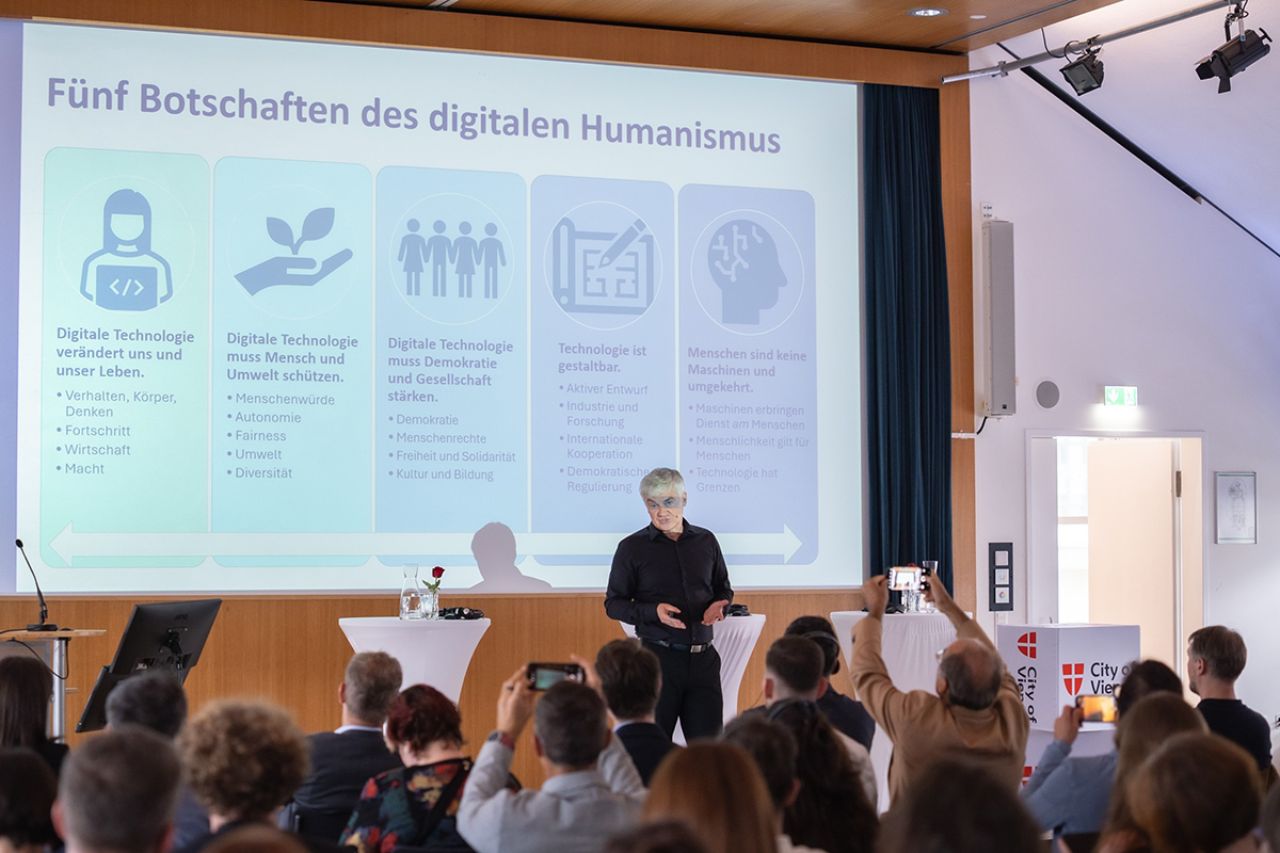
12.20 pm Keynote: Erich Prem, eutema and Technical University of Vienna
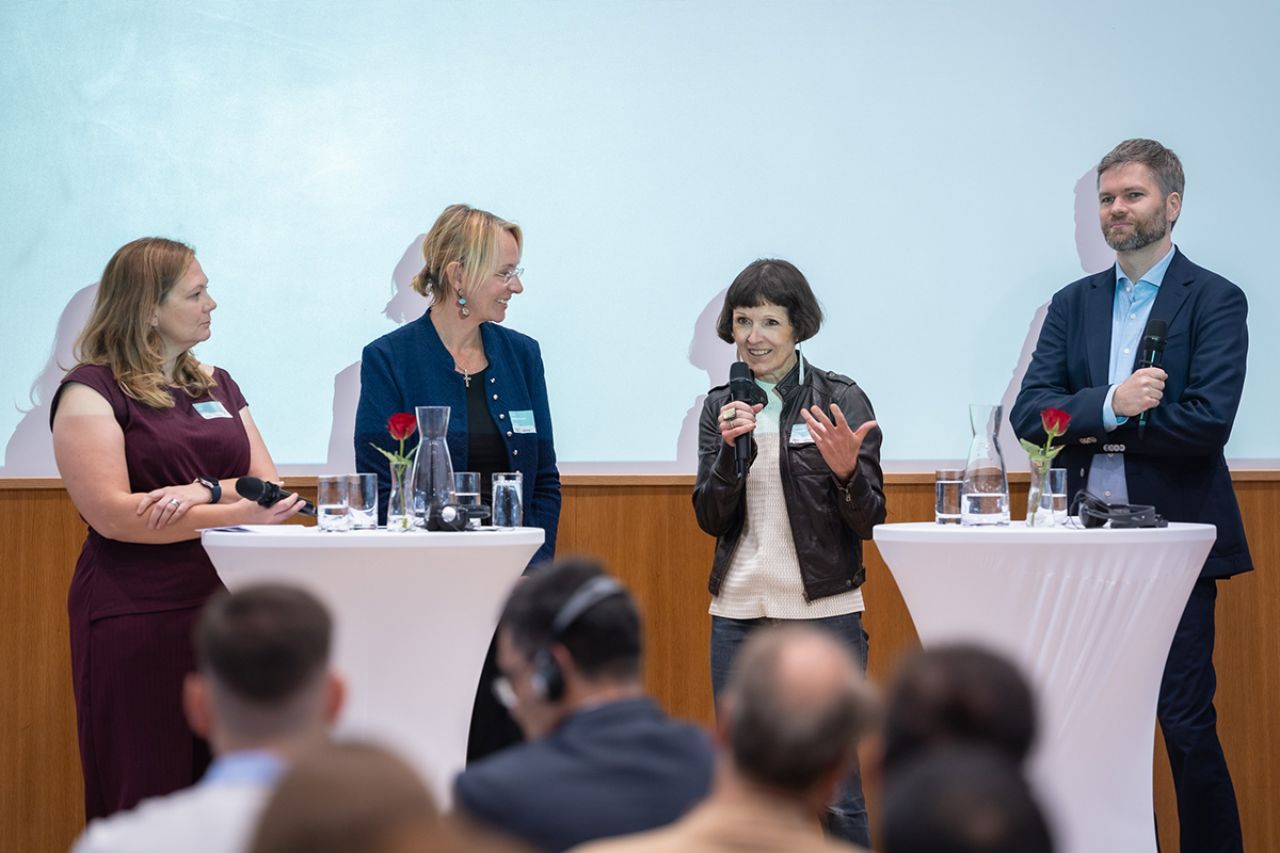
12.50 pm Panel 1: Methods for implementing digital humanism and digital ethics in public services
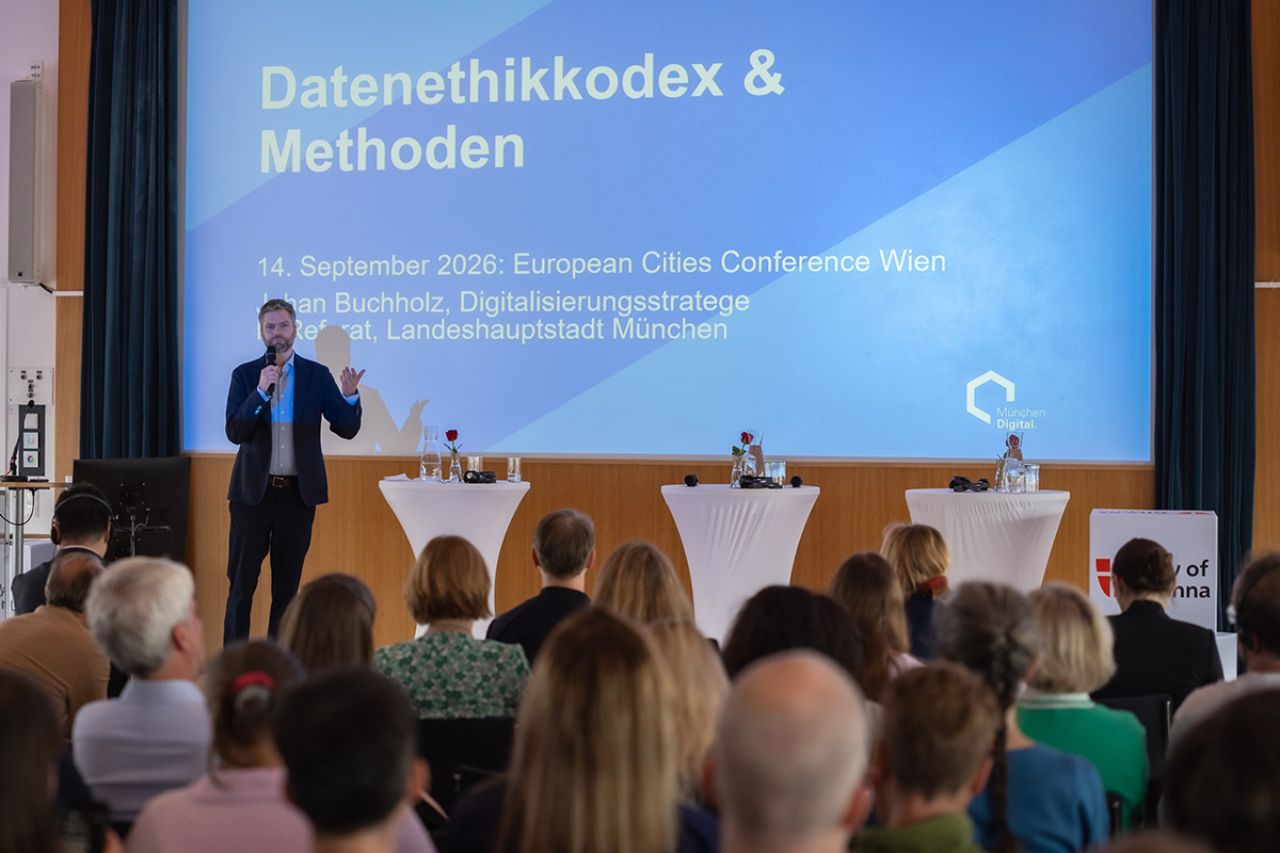
Keynote speech: Johan Buchholz, City of Munich
Panel:
Johan Buchholz, City of Munich
Gertraud Leimüller, leiwand AI
Juraj Podroužek, Research Group Ethics and Human Values in Technology, Kempelen Institute of Intelligent Technologies (KINIT), Bratislava
Sabina Popit, City of Ljubljana
Sarah Spiekermann, Vienna University of Economics and Business
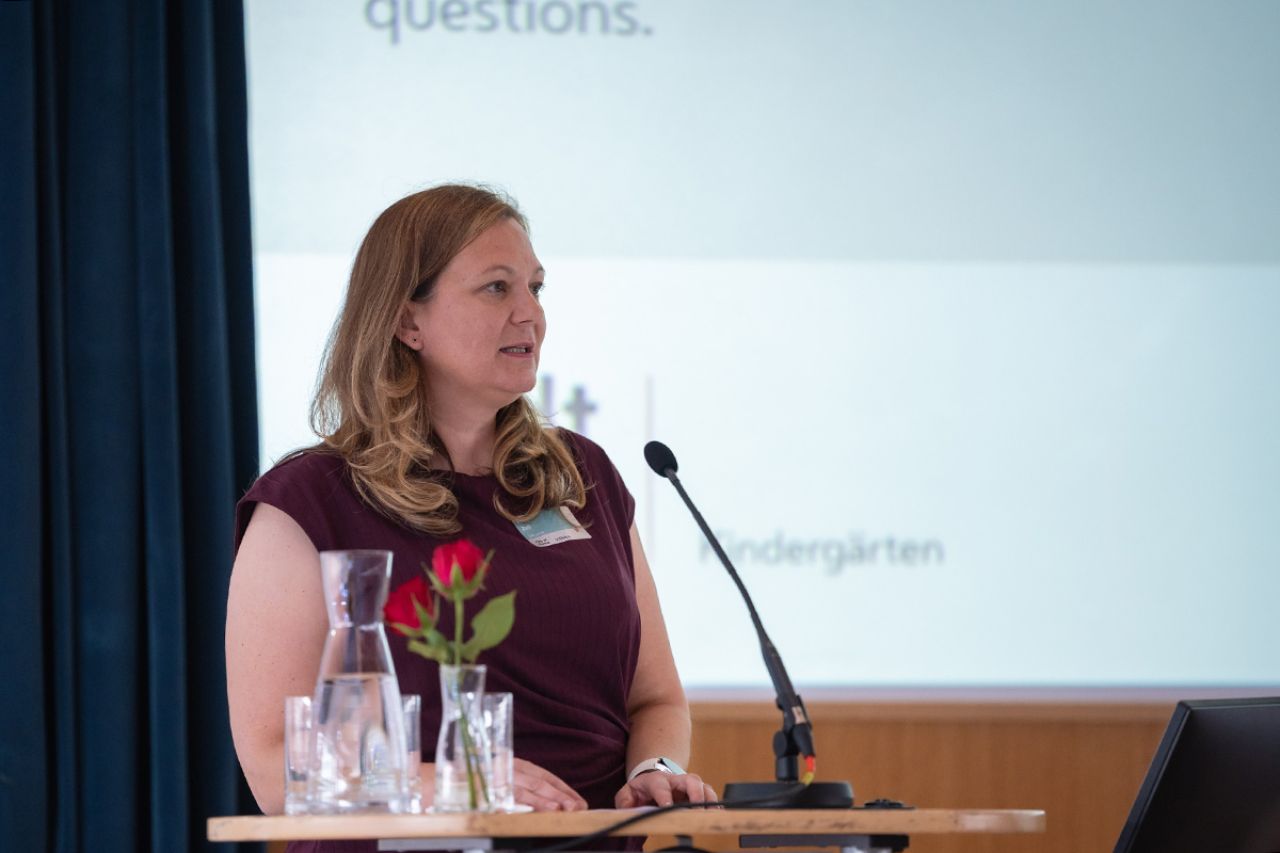
Katrin Zell, Municipal Department Kindergartens, City of Vienna1.50 pm Coffee break
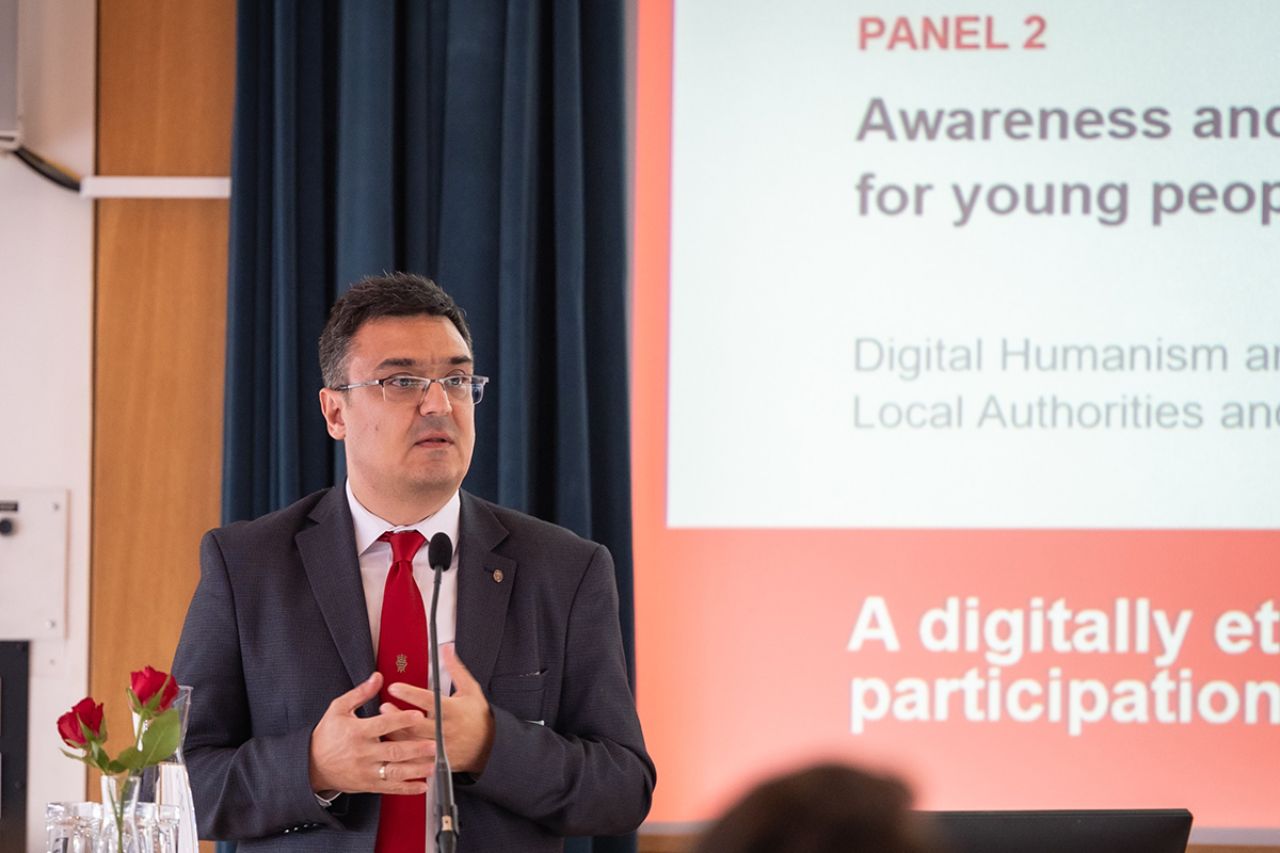
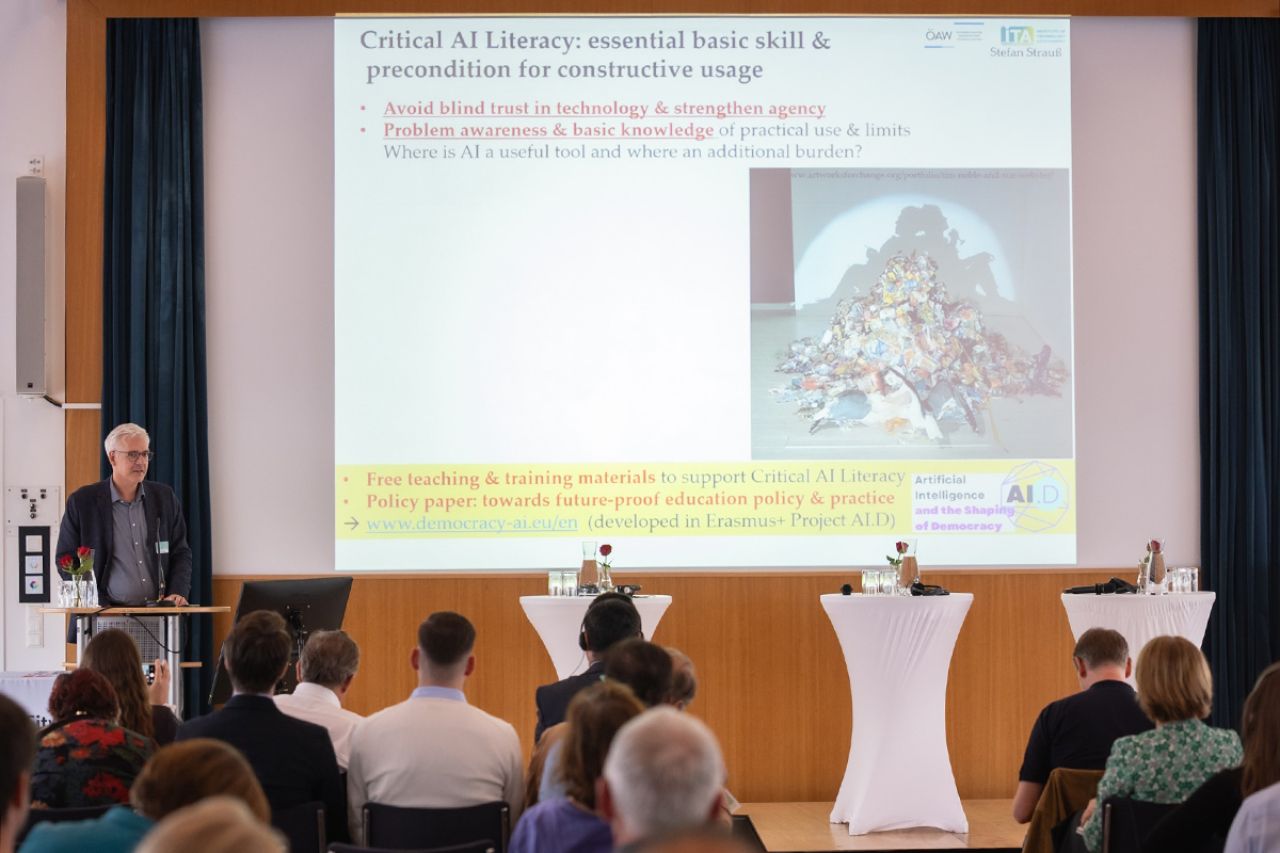
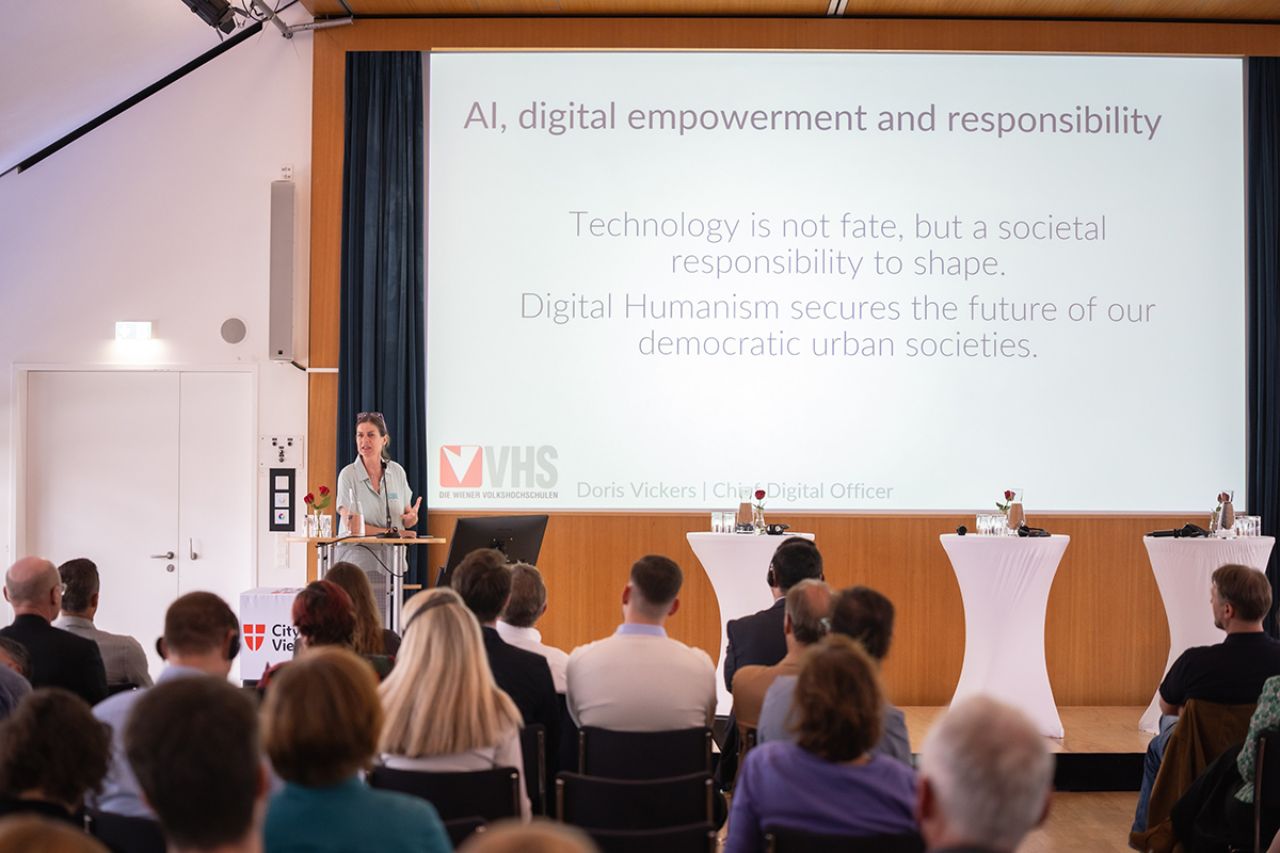
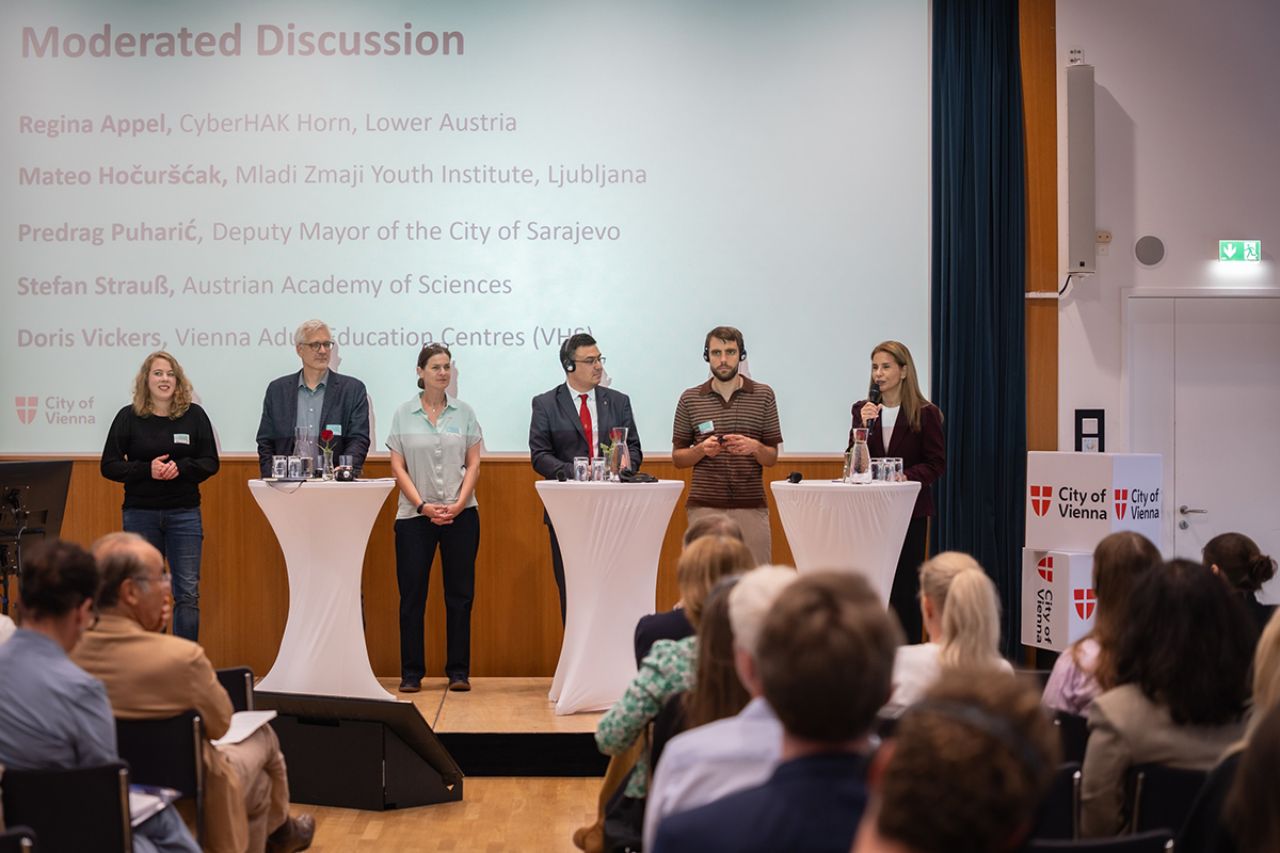
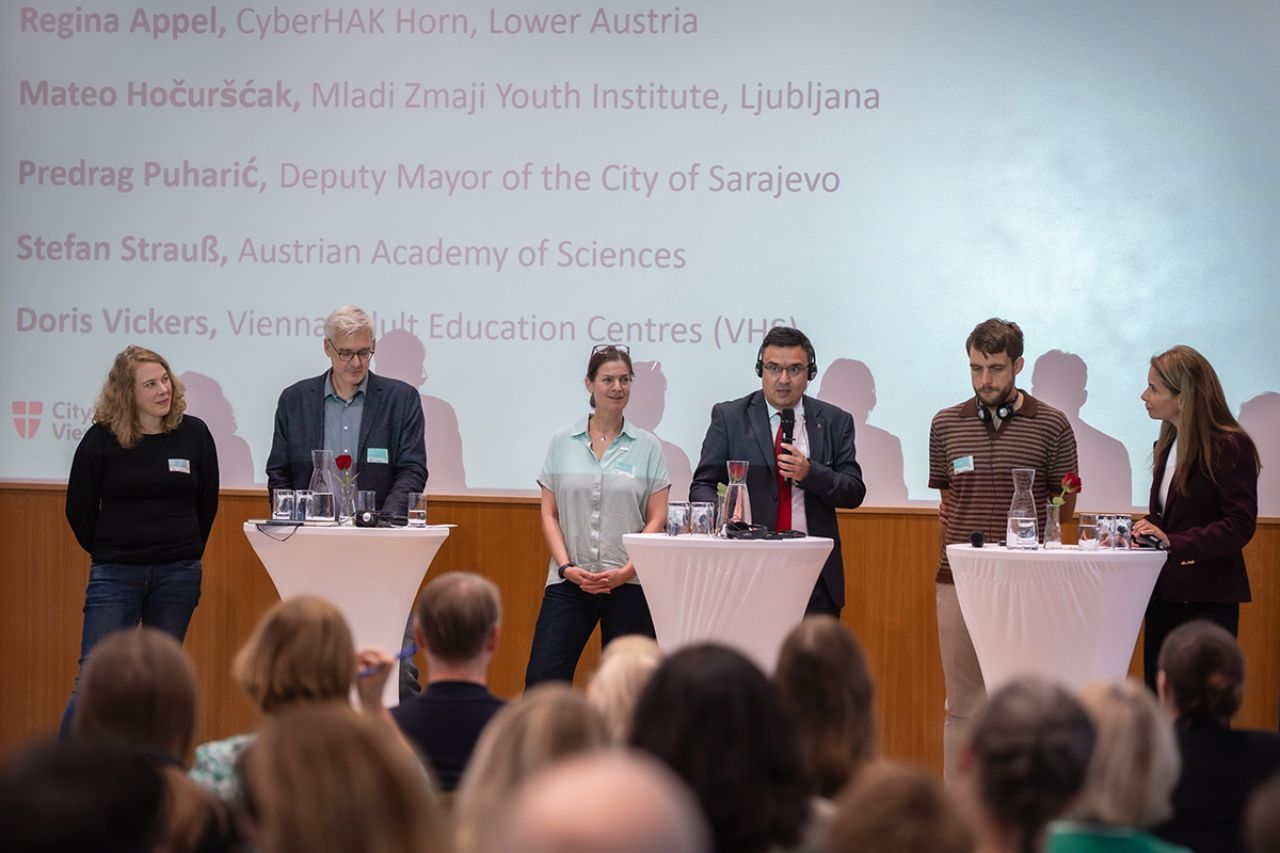
2.20 pm Panel 2: Awareness and training programmes for young people and adults
Keynote speech: Mateo Hočuršćak, Mladi Zmaji Youth Institute, Ljubljana
Panel:
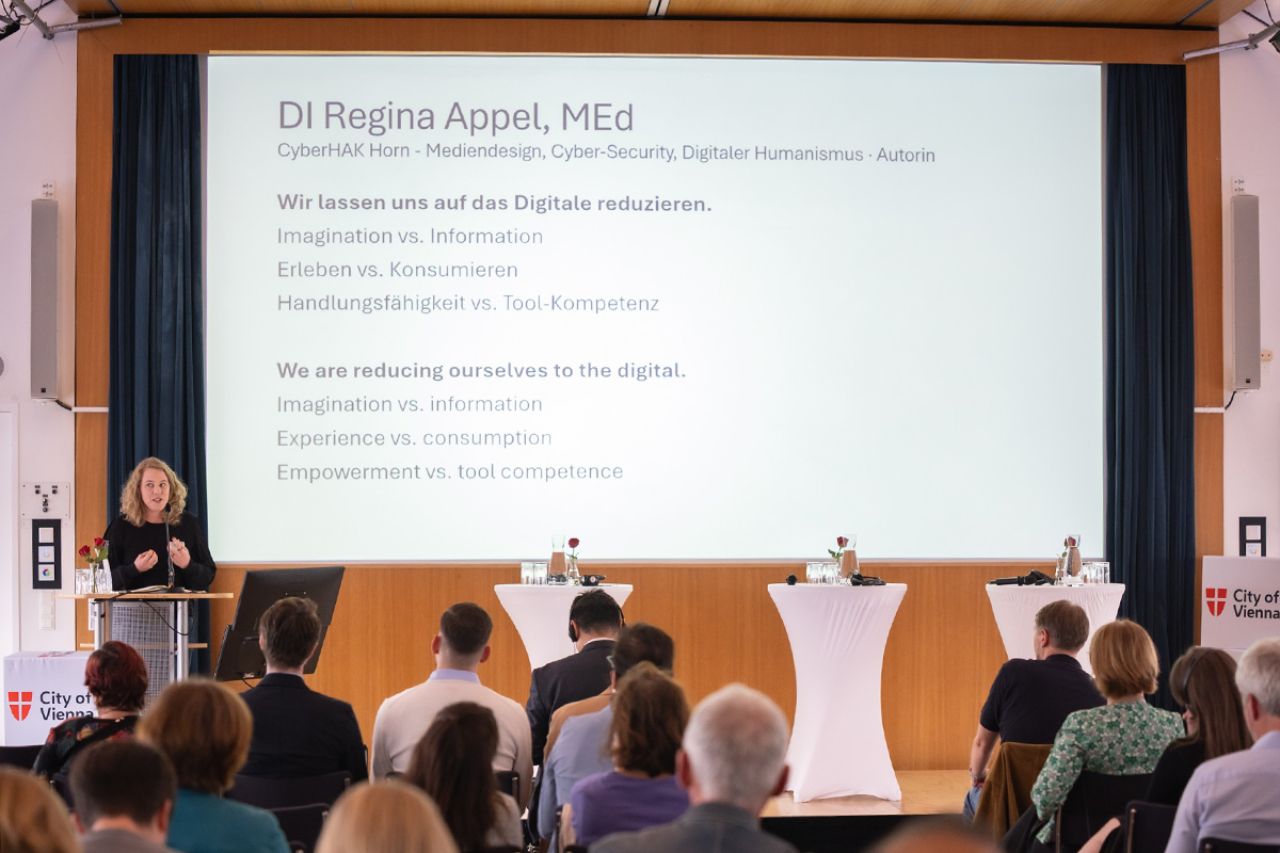
Regina Appel, CyberHAK Horn, Lower Austria
Mateo Hočuršćak, Mladi Zmaji Youth Institute, Ljubljana
Predrag Puharić, Deputy Mayor of the City of Sarajevo
Stefan Strauß, Institute for Technology Assessment, Austrian Academy of Sciences
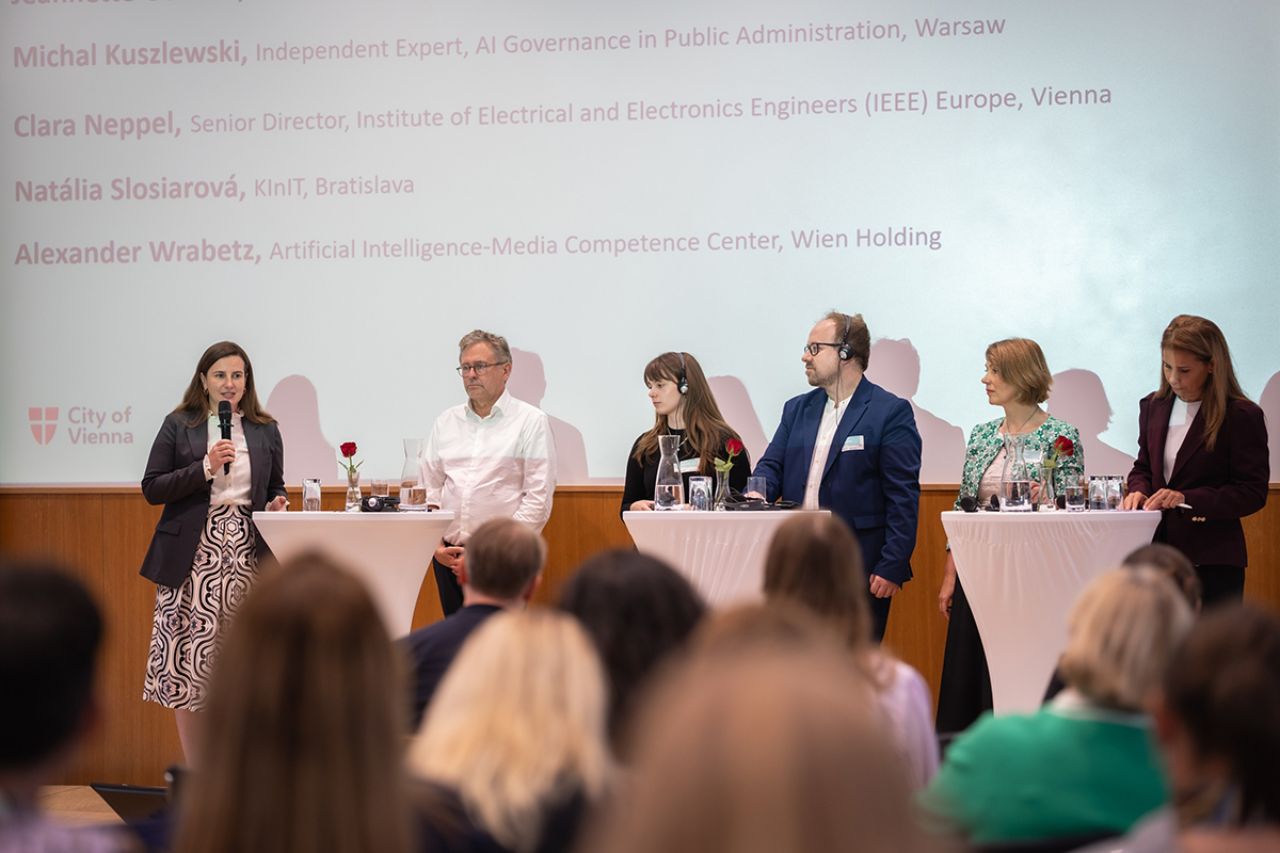
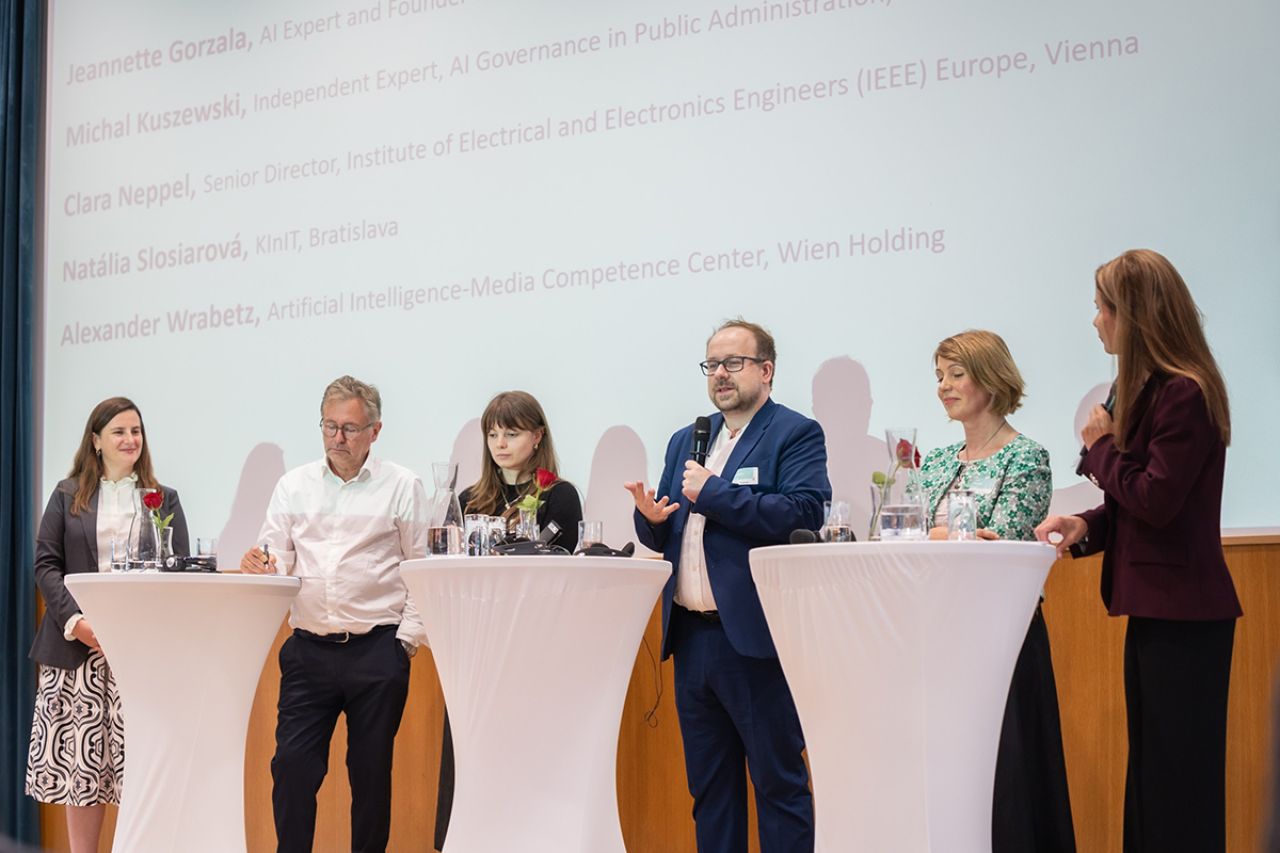
Doris Vickers, Vienna Adult Education Centres (VHS)3.20 pm Panel 3: AI regulation, standards and guidelines for cities
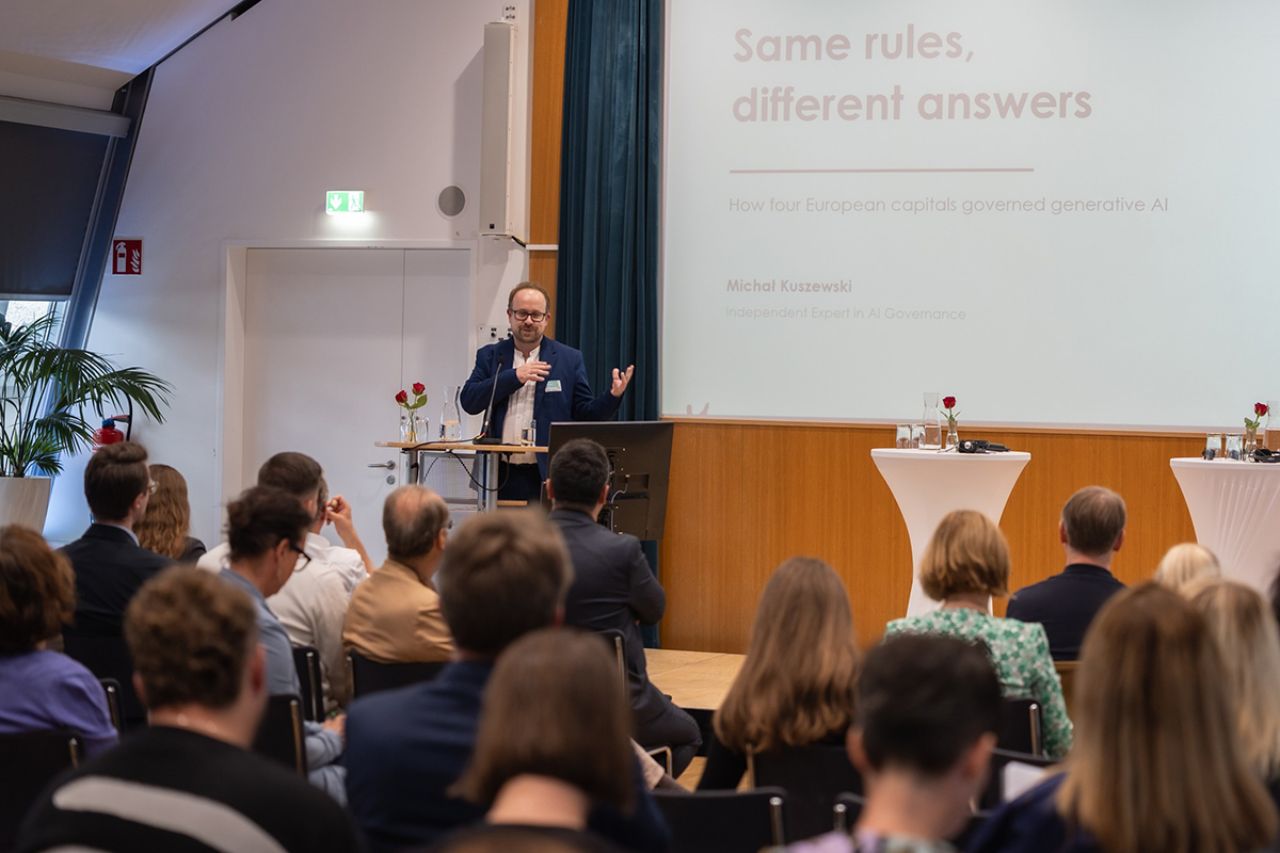
Keynote speech: Michał Kuszewski, Independent Expert, AI Governance in Public Administration, Warsaw
Panel:
Jeannette Gorzala, ACT AI Now, Vienna
Michał Kuszewski, Independent Expert, AI Governance in Public Administration, Warsaw
Clara Neppel, Institute of Electrical and Electronics Engineers (IEEE) Europe, Vienna
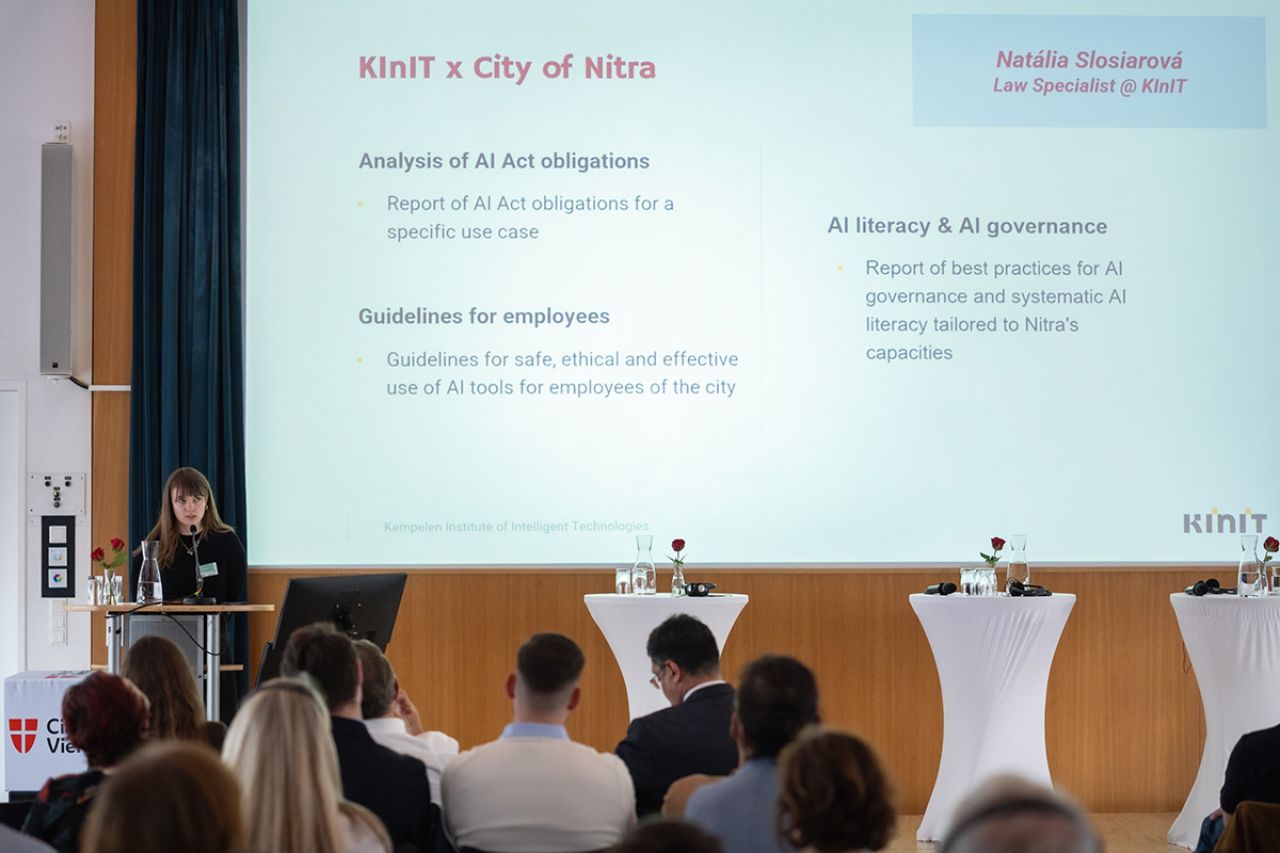
Natalia Slosiarova, Research Group Ethics and Human Values in Technology, Kempelen Institute of Intelligent Technologies (KINIT), Bratislava
Alexander Wrabetz, Artificial Intelligence-Media Competence Center, Wien Holding4.20 pm Vienna Doctoral College on Digital Humanism and Center for Digital Humanism Vienna
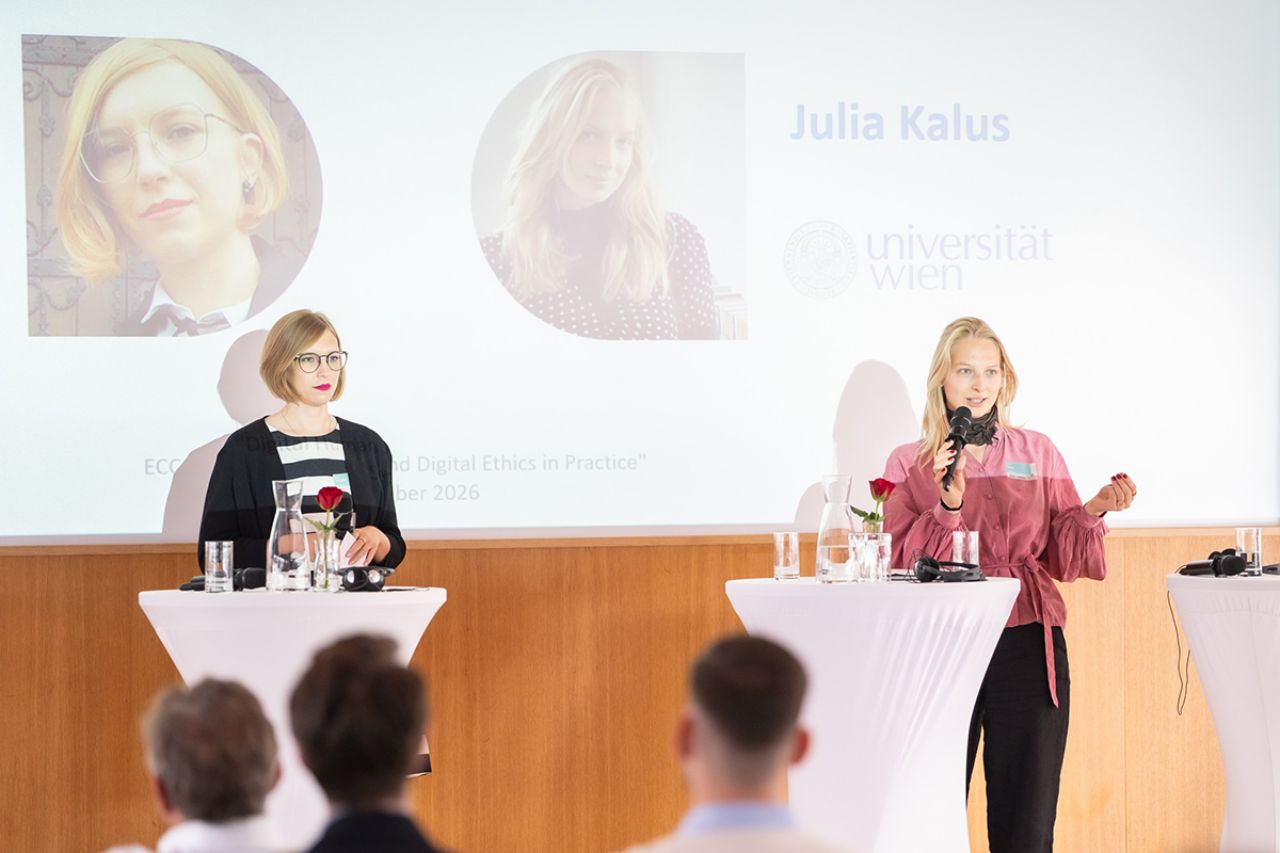
Julia Kalus, Doctoral Candidate, Vienna Doctoral College on Digital Humanism
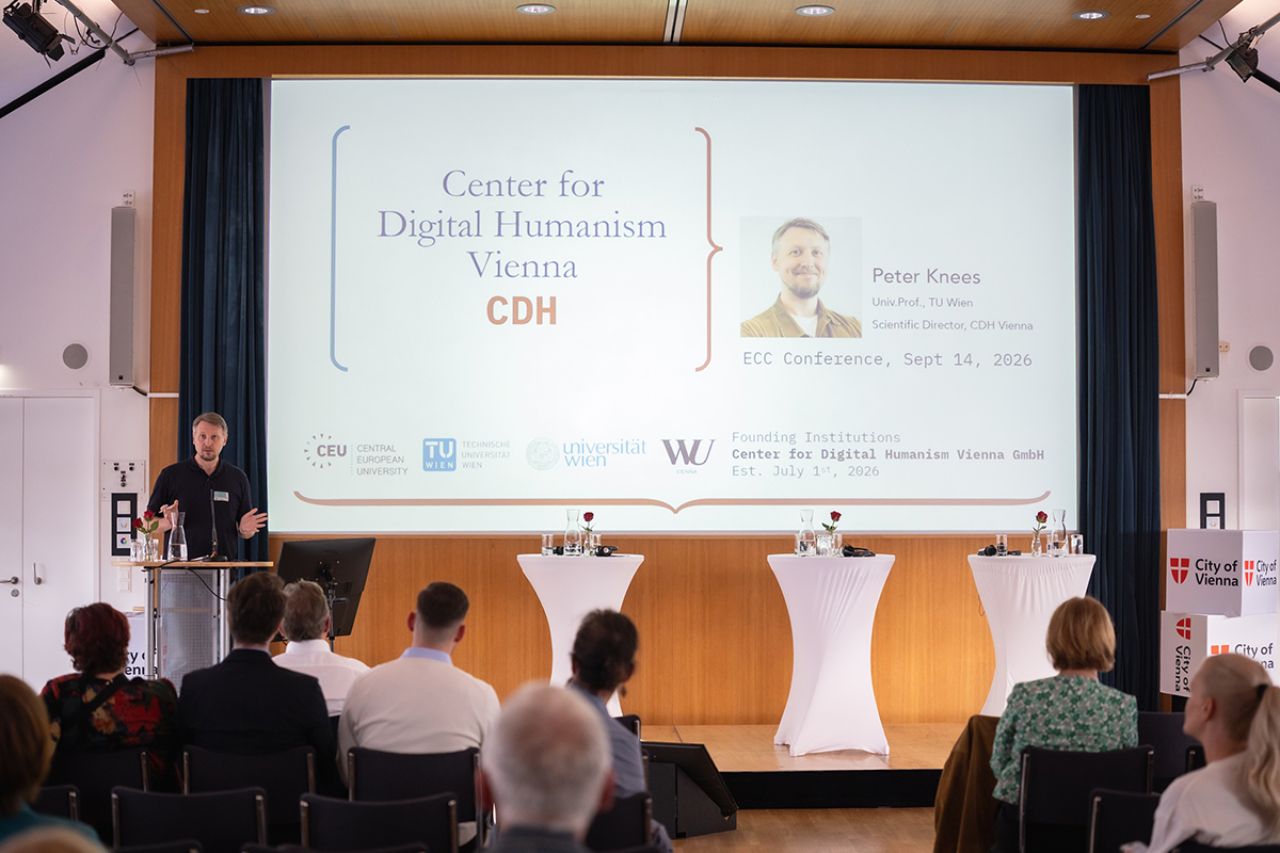
Peter Knees, Designated Direktor CDH Vienna
Julia Schuller, Doctoral Candidate, Vienna Doctoral College on Digital Humanism
Salome Wagner, Program Coordination, Vienna Doctoral College on Digital Humanism4.50 pm Buffet
Day 2, 15. September 2026
Moderator: Sonja Kato
- 8.30 am Registration and coffee
- 9 am Welcome by Municipal Councillor Benjamin Schulz
9.10 am Keynote: Geraldine de Bastion, konnektiv
9.40 am Panel 4: Citizen Science/Participation in municipal digital projects
Keynote speech: Alexandra Egger, Vienna City Library, City of Vienna
Panel:
Alexandra Egger, Vienna City Library, City of Vienna
Anita Eichinger, Vienna City Library, City of Vienna
Valentin Filyov, City of Sofia
Sabrina Halkic, Local Agenda 21
Wolfgang Renner, Social City Wien10.40 am Coffee break
11.10 am Panel 5: Smart City and Digital Humanism
Keynote Speech: Niklas Kossow, CityLAB Berlin
Panel:
Arian Debeljak, City of Ljubljana
František Kaláb, OICT Prague
Karel Kolář, OICT Prague
Niklas Kossow, CityLAB Berlin
Gabriela Viale Pereira, Danube University Krems12.10 pm Panel 6:Digitalisation and public services
Keynote speech: Stephan Leixnering, Vienna University of Economics and Business
Panel:
Doris Allhutter, Institute for Technology Assessment, Austrian Academy of Sciences
Stephan Leixnering, Vienna University of Economics and Business
Martin Pospischill, Municipal Department European Affairs, City of Vienna
Darja Softić Kadenić, Minister of Justice and Administration, Canton Sarajevo
Monika Unterholzner, Deputy Director General Wiener Stadtwerke (public utilities)1.10 pm Closing remarks
1.20 pm Buffet
Speakers
Doris Allhutter
Doris Allhutter is a Senior Academy Scientist at the Institute of Technology Assessment (ITA) of the Austrian Academy of Sciences (ÖAW) and a lecturer at the Johannes Kepler University Linz. Her recent research focuses on the digital transformation of public administration, algorithmic practices in public services, and datafication in the welfare state. Interested in power relations and governmentality, she explores the role of machine learning in reproducing intersectional inequality.
Regina Appel
Regina Appel combines extensive experience in the creative industries with applied educational work. Building on her many years of experience as a web designer and project manager in the arts and cultural sector, she now teaches at the BHS in Horn in the fields of media design, analogue and digital creativity, and cybersecurity. Alongside her teaching activities, she is deeply engaged with Digital Humanism. Her focus lies at the intersection of technological development, social responsibility, and modern education.
Johan Buchholz
Johan Buchholz is a digitalisation strategist in the IT Department of the City of Munich. He is involved in shaping the city-wide digitalisation strategy as well as the data ethics code. Before joining the City of Munich in 2023, he conducted research into ways of translating values into principles and technological functionalities in the context of artificial intelligence in industrial production, as well as into the dynamics of digitalisation projects in organisations. His research affiliations included the Technical University of Munich, the Department of Sociology with a focus on innovation and digitalisation at Johannes Kepler University Linz, and the European New School of Digital Studies at European University Viadrina.
Arian Debeljak
Arian Debeljak is Head of the Office for Digitalisation (CDO) at the City Administration of the City of Ljubljana. He holds a doctoral degree from the University of Ljubljana and the University of Rijeka, with research focused on digital transformation and the digital maturity of Slovenian municipalities. As CDO, he oversees strategic digitalisation initiatives across the City Municipality. Previously, he held technical, consulting, and management positions at various IT companies.
Geraldine de Bastion
Geraldine de Bastion is the founder of Global Innovation Gathering (GIG) e.V., a global network for grassroots innovation and innovation hubs with over 250 members. Since the non-profit organization's founding in 2016, Geraldine has served on the board and led the network. She is currently also working on behalf of GIG as an expert on urban digital transformation from a development policy perspective for the One World Specialist Promoter Program in Berlin. Since 2008, Geraldine has been involved with re:publica, Germany's leading conference on digital societal issues. Her responsibilities have included curating the program, contributing to the program and partner teams, and moderating the main stage at re:publica. Currently, Geraldine supports re:publica by participating in track curation teams and moderating selected interview formats. In 2018, she organized re:publica in Accra, Ghana, with over 2,000 participants and more than 260 speakers from across Africa. Geraldine is a popular moderator and speaker at events focused on digitalization, innovation, and sustainability, and a member of various advisory boards. She was part of the BMBF Future Circle. Currently, Geraldine is a member of the City Lab Berlin Advisory Board, a member of the Committee for Development Service and Humanitarian Aid (AEDHH) for Bread for the World, and a deputy member of the Advisory Board of the Central and Branch Libraries of Berlin. In 2018, she wrote and moderated the Arte documentary "Digital Africa," which captures many of the activities of innovators in the GIG network. In 2026, the Arte documentary "Digital Aliens," which portrays her work in the context of digital justice, was released.
Alexandra Egger
Alexandra Egger heads the Department of User Services, Services and the Digital Library at the
Anita Eichinger
Anita Eichinger is Director of the Wienbibliothek at Vienna's City Hall. As a philosopher with a doctorate, she engages both theoretically and practically with libraries as knowledge institutions in an era of digital transformation. On the practical side, she not only built up the digital Wienbibliothek but also played a central role in developing the Wien Geschichte Wiki and the crowdsourcing platform "Wir schreiben Geschichte." She is responsible for programming the Wiener Vorlesungen and curates numerous discussion series on Digital Humanism. Her most recent publication is the book "Digitalisierung und WIR. Lehrbuch zum Digitalen Humanismus mit praktischen Übungen," edited by Anita Eichinger, Peter Knees, and Hannes Werthner. Vienna: Residenz, 2024.
Valentin Filyov
Valentin Filyov is a Senior Expert in the Digitalisation Directorate at Sofia Municipality. His goal is to make the city's data useful — making it publicly available through Sofia's Urban Data portal and putting it to practical use with Your Sofia. He also contributes to the Sofia Decides citizen budgeting platform, where residents can suggest infrastructure improvements. All three combined encourage people to build a better city — digitally and physically.
Jeannette Gorzala
Jeannette Gorzala works at the intersection of business, law, and technology. Through ACT AI NOW, she supports public institutions in developing AI governance frameworks that go beyond a simple compliance check. Her focus includes Public AI and the use of AI in cities and municipalities, where she translates regulation into practical, actionable guidelines. She is Vice Chair of the Austrian Federal Government’s AI Advisory Board and an AI expert on the City of Vienna’s AI expert panel.
Sabrina Halkic
Sabrina Halkic leads the Local Agenda 21 Vienna, an organization that promotes citizen participation and empowerment at the local level. Previously, she worked for many years as a political advisor to City Councilor Jürgen Czernohorszky, focusing on issues of participation, involvement, and integration. Her academic background at the Universities of Vienna and Amsterdam, with a focus on urban governance structures, forms the foundation for her commitment to creating fairer and more vibrant neighborhoods in Vienna.
Mateo Hočuršćak
František Kaláb
František is a Tech Lead at OICT Prague, a Prague municipal entity responsible for managing and implementing Smart City initiatives within the city. In his role, Frantisek leads the Data Analytics team, focusing on building data platforms and analytics solutions that contribute to the city’s digital transformation. Before joining OICT, Frantisek gained his data science and analytics skills during his tenure at international companies, including his work at Jodel in Berlin, Germany.
Julia Kalus
Julia Kalus is a University Assistant at the Department of Innovation and Digitalisation in Law at the University of Vienna. She studied European Law at Maastricht University (The Netherlands) and obtained her LLB in July 2022. Julia also studied Law and Technology at Tilburg University. In 2025, she received her LLM in European and International Business Law. Her professional experience includes, among others, working at the Polish Data Protection Authority and the European Union’s Agency for Fundamental Rights in Vienna. Currently. Julia is part of the Vienna Doctoral College on Digital Humanism, an interdisciplinary doctoral program. Julia’s research interests are mainly in European Law, privacy, platform governance, disinformation, AI regulation, and fundamental rights.
Karel Kolář
Karel is an Innovation Manager at OICT Prague, the municipal innovation and technology company of the City of Prague, where he focuses on the discovery phase of urban innovation processes. His work centers on identifying and framing complex city challenges, mapping trends and needs, and translating them into actionable innovation concepts through participatory and human-centered approaches. He has experience in participatory planning and has provided expert advisory to coordinators of participation within local governments, as well as contributing to educational programs focused on participatory processes.
Niklas Kossow
Dr. Niklas Kossow is the Head of the Smart City & Administrative Innovation Division at CityLAB Berlin. There, he works with a great team on the digital transformation of the German capital and the implementation of Berlin’s smart city strategy, “Gemeinsam Digital: Berlin.” CityLAB Berlin is a project of the Technologiestiftung Berlin, funded by the Berlin Senate Chancellery. Previously, Niklas worked as an analyst and consultant for the United Nations Development Programme (UNDP), the World Wide Web Foundation, Freedom House, Transparency International, and the German Society for International Cooperation (GIZ) GmbH. In his doctoral research at the Hertie School in Berlin, he examined the use of digital technologies by anti-corruption movements. His focus was on digital procurement programs in Ukraine and the use of distributed ledger technology to combat corruption.
Michał Kuszewski
Michał Kuszewski is an independent expert in responsible AI governance for the public sector. He coordinated Directions for the Responsible Use of Generative AI in the City of Warsaw, one of the first municipal-level ethical frameworks for GenAI in Europe, developed under the patronage of Poland's Ministry of Digital Affairs and the Polish Presidency of the Council of the EU. He currently works as an AI Solutions Architect at Polska Grupa Lotnicza (Polish Aviation Group).
Gertraud Leimüller
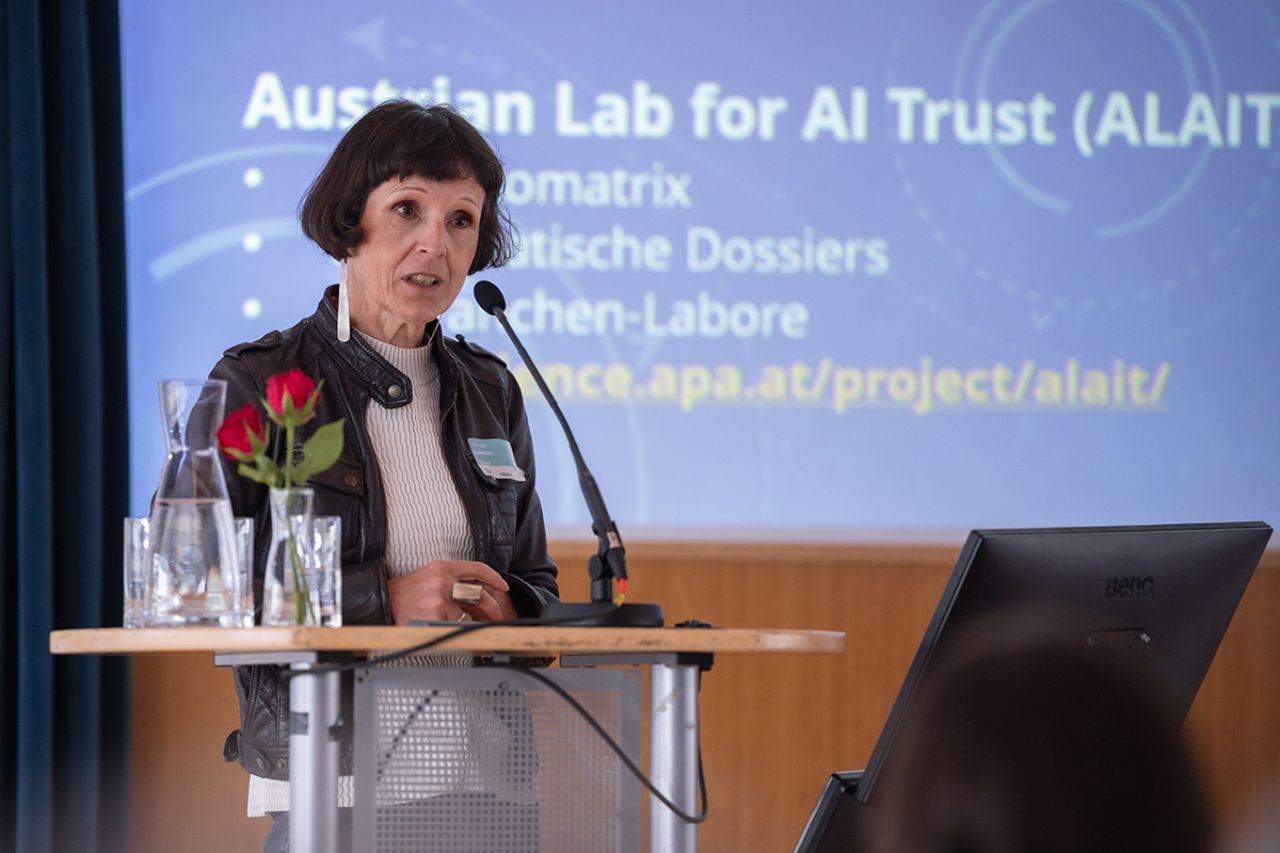
Innovation expert Gertraud Leimüller is co-founder and CEO of leiwand.ai. Since 2022, the deep-tech startup has been developing new methods and technologies for testing and risk management of AI systems in businesses and public administration, healthcare systems, and the financial sector. She heads the Austrian Labs for AI Trust (ALAIT) on behalf of the Federal Ministry for Innovation, Mobility and Infrastructure, played a key role in developing the implementation plan for Austria's national AI strategy, and is involved in AI projects at the national and European level. Previously, Gertraud Leimüller built up the open-innovation consultancy winnovation, working with renowned international clients such as Philips, Fujitsu, Sony, Voestalpine, and the German Stifterverband. She studied at the University of Vienna (Dr.rer.nat., Mag.rer.nat.), Harvard University (Master in Public Administration), and MIT. She is a member of the University Council of Karl Landsteiner Private University, a reviewer for European and national innovation programs, a book author, and a columnist. She is also the social-science lead and co-initiator of the fAIr by design research consortium, in which companies and universities jointly developed a novel process model and toolbox for discrimination-free and fair AI.
Stephan Leixnering
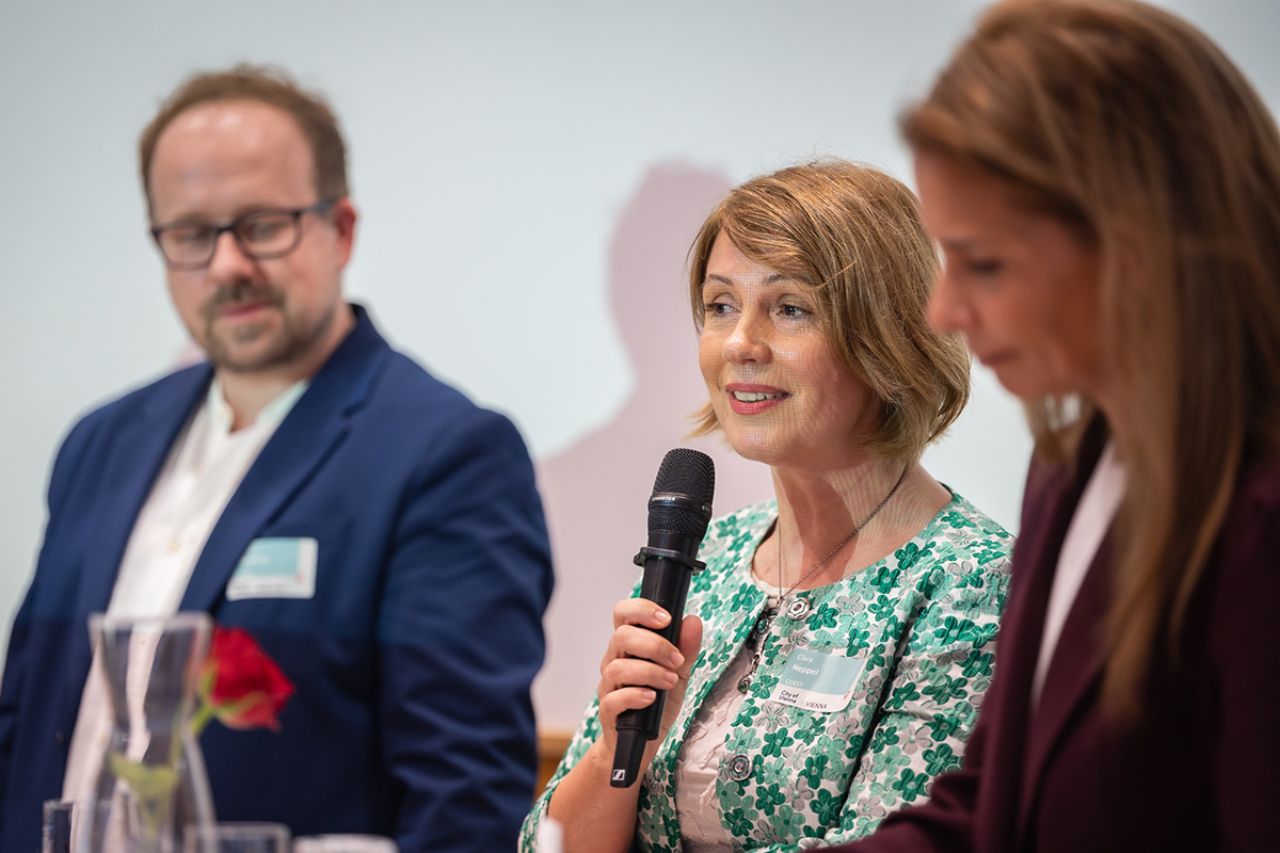
Clara Neppel
Clara Neppel is a Senior Director at IEEE, the world's largest professional organization dedicated to advancing technology for humanity. She is involved in areas such as emerging technologies, standardization, entrepreneurship, and the social and environmental implications of technology. Clara Neppel is also Co-Chair of the OECD Expert Group on AI, Data and Privacy, a member of the Austrian AI Advisory Board, the European Commission's Expert Forum on Frontier AI, and the EY.ai Global AI Advisory Council. She holds a PhD in Computer Science from the Technical University of Munich and a Master's degree in Intellectual Property Law and Management from the University of Strasbourg.
Juraj Podroužek
Sabina Popit
Sabina Popit is a geographer and geologist and Head of the Office for Digital Development and Innovation at the City of Ljubljana. Her professional experience spans research, education, sustainable urban development and digital transformation. She led the preparation of Ljubljana’s Digital Development Strategy and contributes to EU-funded digitalisation projects and interdisciplinary initiatives. Working closely with universities, she also brings real-world urban challenges into academic practice, connecting public administration, research and innovation.
Martin Pospischill
Martin Pospischill is an expert in European law and municipal services of general interest. From 1998 to 2001, he worked as a legal officer at the Vienna Liaison Office in Brussels, and from 2001 to 2003 at the Constitutional Service. Since 2003, he has been with the City of Vienna’s Department for European Affairs (MA 27), which he has headed since 2007. Martin Pospischill is also a member of the Monitoring Committee of the EU programme INTERACT.
Erich Prem
Erich Prem is Chief Strategist and Managing Director of eutema. He advises companies, research institutes, and ministries on AI and ICT strategy. Erich Prem was a visiting researcher at the MIT AI Lab in the United States. He holds a degree in industrial engineering and management and conducts academic work in the fields of artificial intelligence and ethics, Digital Humanism, and innovation research. He teaches data ethics and Digital Humanism at Vienna University of Economics and Business (WU) and Vienna University of Technology (TU). He is President of the Association for the Promotion of Digital Humanism and leads the EU Digital Humanism Initiative EUDHIT.
Predrag Puharić
Predrag Puharić has been Deputy Mayor of Sarajevo since July 2025, with a focus on digitalisation, education, international cooperation and modern public administration. With more than twenty years of experience in cybersecurity, digital transformation, research and education, he brings a broad perspective on the challenges and opportunities of digitalisation for cities and their citizens. As founder and CEO of the Cyber Security Excellence Centre (CSEC), he has worked extensively on cybersecurity awareness, capacity building and digital resilience, bringing together technical expertise with a strong focus on public-sector needs.
Wolfgang Renner
Wolfgang Renner is Director of the Social City Academy Vienna. His work explores the intersections of science communication, media literacy, digital humanism, and the relationship between science, society, and culture. Previously, he served at Austrian Research Centers, directed the Wiener Zeitung Academy, established dialogue platforms with the European Forum Alpbach and co-founded the Austria Science Talks in North America. He lectures at the University of Applied Arts Vienna and serves on various scientific advisory boards. He studied communication science, journalism, and philosophy, additional executive studies in marketing management.
Julia Schuller
As an interdisciplinary researcher, Julia Schuller holds a Bachelor’s degree in Informatics & Philosophy of Science from TU Munich and a Master’s degree in Digital Social Sciences from the University of Oxford. Her research interest centres on human epistemic agency and their empowerment in digital and technical contexts. To this end, her PhD thesis at WU Wien explores how far formal knowledge representations can be leveraged to bridge and communicate intricate societal phenomena across disciplines and social realms. In doing so, it aims to render disciplinary presuppositions and socio-technical mechanisms explicit for versatile recipients, fostering stakeholder collaboration geared towards enabling epistemic agency in the infosphere.
Natália Slosiarová
Natália Slosiarová is a researcher in digital law and AI ethics at KInIT and is also affiliated with the Czech Law and Advanced Technologies Research Institute. Her work focuses on the fundamental rights implications of artificial intelligence, examining how emerging technologies reshape legal protections in practice. She has led and contributed to collaborations with cities and public institutions on AI literacy and governance, and regularly advises public and private sector organisations on EU digital law compliance.
Tanja Sinozic-Martinez
Tanja Sinozic-Martinez has been an Expert on Digital Humanism at the City of Vienna since February 2024. Before joining the City of Vienna, she worked as a researcher at the Institute of Technology Assessment of the Austrian Academy of Sciences, Vienna University of Economics and Business, and the Science Policy Research Unit (SPRU) at the University of Sussex. Tanja Sinozic-Martinez holds a BSc in Environmental Policy and Economics from the London School of Economics and Political Science, an MPhil in Regional Planning from the University of Cambridge, and a PhD in Science and Technology Policy Studies from SPRU.
Darja Softić Kadenić
Dr. Darja Softić Kadenić has served as Minister of Justice and Administration of Sarajevo Canton since 2021. She is a professor of civil law at the University of Sarajevo, Faculty of Law, with a professional focus on the rule of law, public administration reform and digital governance. In her ministerial role, she has contributed to the development of e-government in Sarajevo Canton, including digital public services, electronic identification, interoperability and more efficient administrative procedures. Her work also focuses on transparency, integrity and strengthening citizens’ trust in public institutions. She holds a PhD in Law from the University of Sarajevo and an LL.M. in South East European Law and European Integration from the University of Graz.
Stefan Strauß
Stefan Strauß is Senior Academy Scientist at the Institute of Technology Assessment (ITA), Austrian Academy of Sciences (ÖAW). His main research focus is at the nexus between technology and society, governance of socio-technical systems and the question how digitization affects social practices, security, human rights, policy and value systems. Recent research projects CAIL and AI.D on AI and knowledge work, Critical AI Literacy and education in the age of AI.
Monika Unterholzner
Monika Unterholzner has been a member of the Executive Board of Wiener Stadtwerke since January 1, 2024. She is responsible for the areas of mobility, funeral services, cemeteries, IT, security, and innovation. She studied business administration at the Vienna University of Economics and Business and began her career at the European Commission. After further positions at the Austrian Society for Environment and Technology, the Vienna Business Agency, and Hafen Wien, she joined the Wiener Stadtwerke Group in 2013. At Wiener Stadtwerke, she initially headed WIPARK Garagen GmbH and, from 2017 to 2023, Wiener Lokalbahnen GmbH.
Gabriela Viale Pereira
Gabriela Viale Pereira is Associate Professor of Information Systems and Deputy Head of the Department for E-Governance at the University for Continuing Education Krems in Austria. Her research focuses on digital government, smart cities, artificial intelligence and public value, with particular interest in the socio-technical and governance dimensions of digital transformation. She leads and contributes to international research projects exploring human-centred AI, digital governance and smart-city innovation, including work on sustainable digital twins for cities and regions. She is also the founder of the Smart Cities chapter of the Digital Government Society and has been elected Vice-Chair of the IFIP WG 8.5 on Information Systems in Public Administration.
Doris Vickers
Doris Vickers heads the Digitalization Department at Wiener Volkshochschulen GmbH (Vienna Adult Education Centers). As a specialist for computers, the internet, and multimedia, she is committed to communicating the principles of digital humanism in an understandable and accessible way. Her central goal is to facilitate access to the digital world for everyone, to remove barriers, and to actively and sustainably promote digital participation and education in society.
Salome Wagner
Salome Wagner is the Programme Coordinator of the Vienna Doctoral College on Digital Humanism at TU Wien's Faculty of Informatics. In this role, she is responsible for disseminating the intra-university college and its associated PhD projects. She is committed to initiatives such as "ShegoesDigital", which foster diversity and support the responsible development of an innovative, inclusive and future-oriented ecosystem. She also represents Austria at CEPIS, the Council of European Professional Informatics Societies.
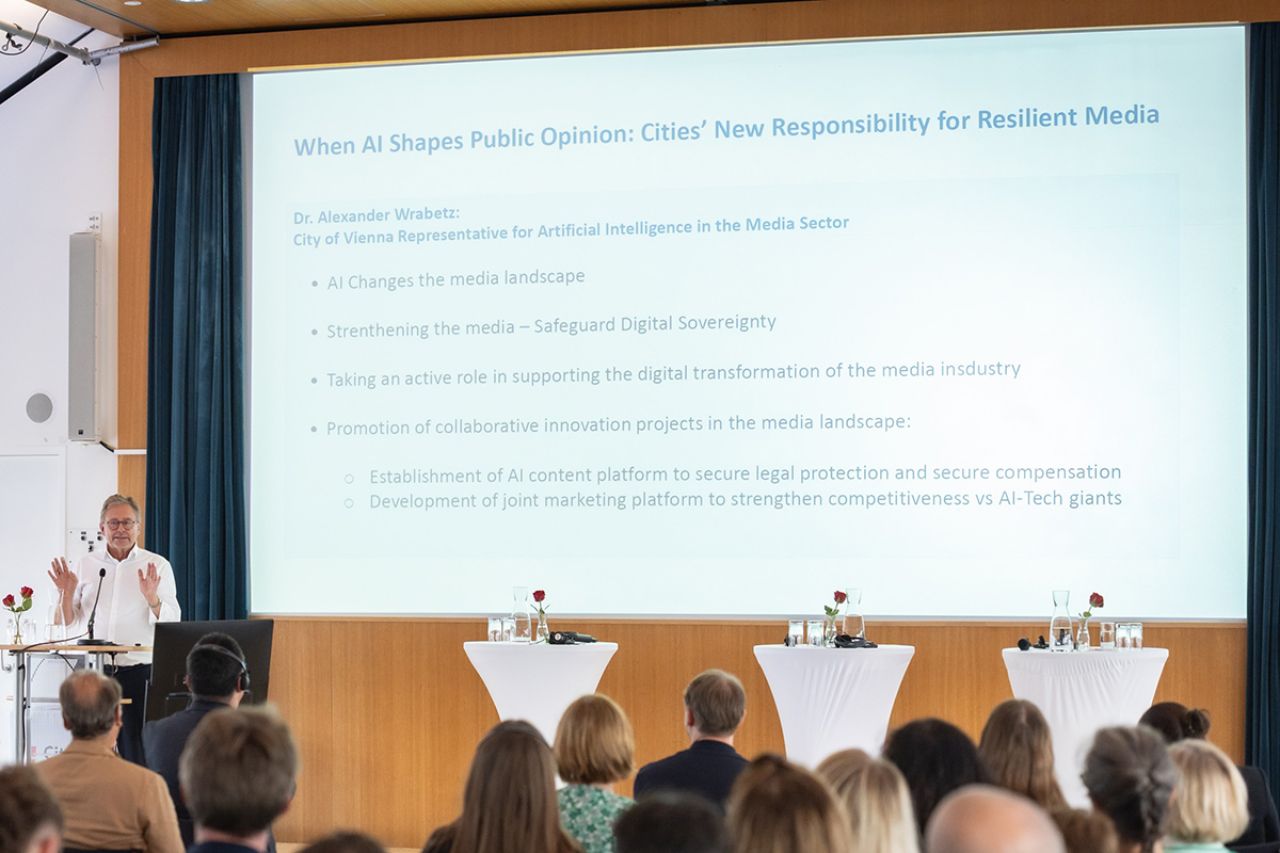
Alexander Wrabetz
Dr. Alexander Wrabetz is Commissioner of the City of Vienna for the media location in the context of Artificial Intelligence and heads the Artificial Intelligence Media Competence Center (AIMK) of Wien Holding.
In this role, he acts as the central operational hub for the strategic further development of Vienna’s media location. His responsibilities include creating framework conditions for AI use in media in line with Digital Humanism, protecting copyrights, and developing solutions against deepfakes, as well as promoting innovation, mobilizing funding, and initiating training programs to strengthen Vienna’s competitiveness.
Katrin Zell
Katrin Zell heads the Research, Development & Pedagogical Trends unit at Stadt Wien Kindergärten. Her work focuses on evidence-based quality development, the advancement of early childhood pedagogical practice, and the transfer of scientific findings into educational organizations. In her role, she brings together research, practice, and innovation with the goal of shaping a future-oriented educational landscape for children and professionals.